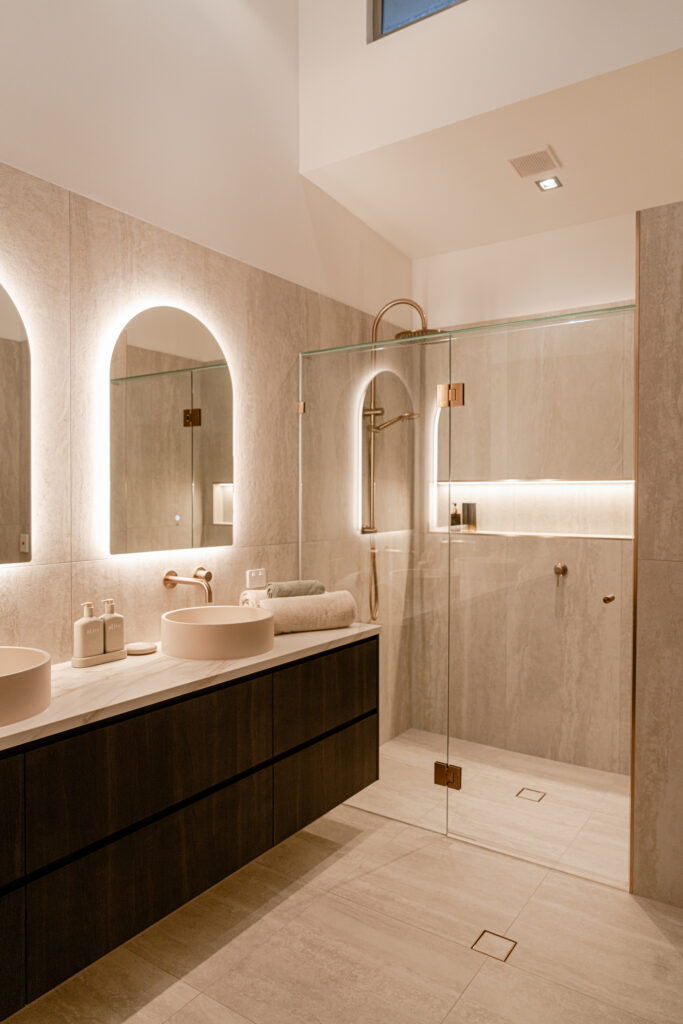
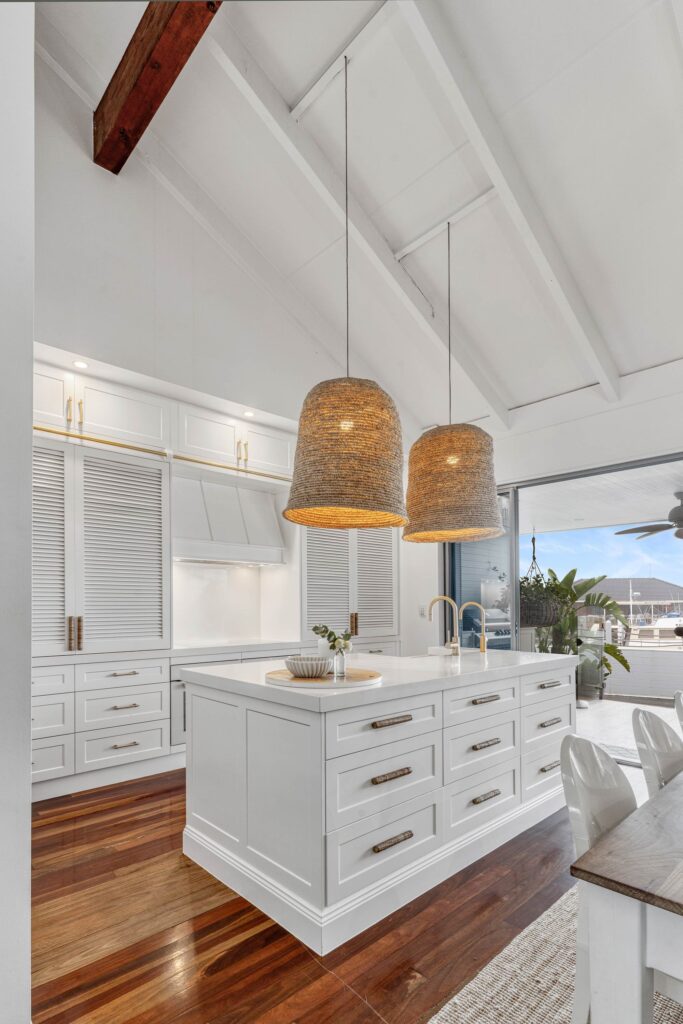
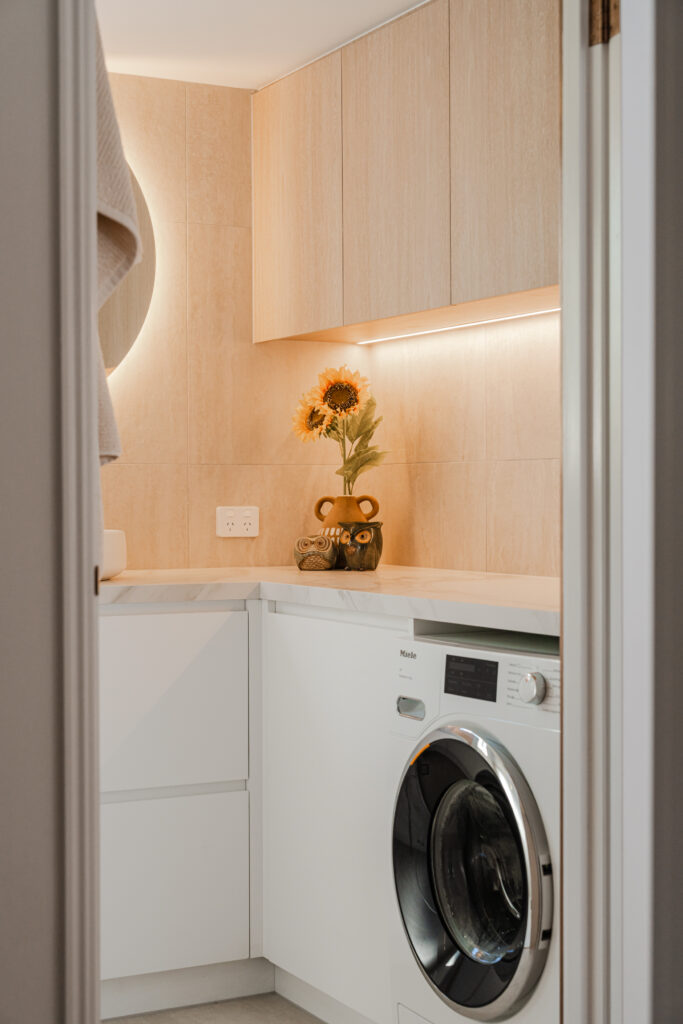
Renovating an apartment looks simpler than renovating a house. Fewer rooms, a smaller floor area, no roof or yard. In practice it is the other way around. You share a structure, a set of services and a lift with dozens of neighbours, and a body corporate has a say in what happens inside your walls. Get the order wrong and a beautifully designed kitchen can sit in storage for months while you wait on an approval you could have lodged at the start.
On the Gold Coast, that matters more than almost anywhere else in Queensland. Around 46% of dwellings in Gold Coast City are medium or high density, from 1980s beachfront towers in Surfers Paradise to newer high-rises in Broadbeach and Southport. This guide covers what to check before you commit: approvals, the limits your building sets, logistics, realistic costs and timelines, and what to ask a builder.
Why Renovating an Apartment Is Different From Renovating a House
When you own a house, you own the building and the land. When you own an apartment, you own a lot within a community titles scheme, and its boundary generally sits at the midpoint of the structural walls, floors and ceilings around you. The slab under your tiles, the drainage stack in your bathroom and the fire system in your ceiling are shared, or at the very least affect people other than you.
So some work needs permission, some is limited by how the building was engineered, and all of it has to fit around the people on the other side of the wall.
Start With Your Body Corporate, Not Your Mood Board
Queensland apartment buildings are governed by the Body Corporate and Community Management Act 1997 and by each scheme’s own by-laws. Before you collect a single tile sample, ask your body corporate manager for your building’s registered by-laws and read them end to end, looking for rules on flooring, work hours, contractor insurance, lift use and waste.
What usually needs approval
Cosmetic work inside your lot, such as painting, new cabinet doors or replacing appliances in the same position, rarely needs sign-off. These items usually do:
- Structural changes, including removing or altering internal walls
- Anything that touches common property, such as the slab, external walls, balconies or shared services
- Relocating plumbing, drainage or a wet area
- Changing carpet to hard flooring, where a by-law covers it
- Changes visible from outside, including air conditioning condensers, screens and balcony finishes
The Queensland Government’s guidance on improving common property and lots explains that a committee can approve an owner’s improvement to common property costing less than $3,000, provided it does not detract from the building’s appearance. Anything beyond that needs an ordinary resolution at a general meeting.
How long approval takes
Plan for weeks, not days. A committee generally has up to six weeks to decide a motion within its authority, and anything that goes to a general meeting takes longer. Submissions with drawings, a scope of works, the builder’s licence and insurance, and waterproofing and acoustic specifications tend to come back faster than a one-line request. That paperwork is included as standard in our apartment renovations Gold Coast service, and our guide to body corporate renovation rules walks through the application step by step.
The Building Itself Sets the Rules
Even with approval in hand, the way your building was designed limits what is possible. These constraints most often reshape an apartment design.
The slab and the structure
Many Gold Coast towers sit on post-tensioned concrete slabs, with steel cables under high tension running through the concrete. Cutting one is dangerous and expensive to repair, so coring a new hole for a relocated drain usually means scanning the slab and getting an engineer’s sign-off. Internal walls are also more likely to be load-bearing or fire-rated than they look. If your building went up before 1990, assume older floor tiles, wet-area sheeting and textured ceilings may contain asbestos until tested.
Plumbing and drainage
Your bathroom and kitchen connect to fixed vertical stacks shared with the floors above and below. Moving a toilet or shower a short distance is often possible. Moving a whole bathroom across the apartment usually is not, because drains need fall to reach the stack and the floor has limited depth to create it. In some buildings, your drainage runs through the ceiling of the apartment below, so access depends on your neighbour. Queensland plumbing and drainage work must be done by a licensed plumber regardless of value.
Waterproofing and wet areas
A leaking shower in a house damages your own home. In an apartment it damages your neighbour’s ceiling, and the dispute over who pays can run for months. Wet-area waterproofing should be done by a licensed waterproofer to Australian Standard AS 3740, with a certificate you keep and provide to the body corporate. Expect the committee to look hardest at this part of any bathroom or laundry application.
Hard flooring and noise
Replacing carpet with timber, hybrid or tiles is one of the most popular apartment upgrades and one of the most common causes of disputes. Writing for the REIQ, the Commissioner for Body Corporate and Community Management explained how hard flooring noise complaints are decided: some schemes have by-laws restricting hard floors, and an adjudicator can order an owner to reinstate carpet or add sound insulation where noise is unreasonable. Choose an acoustic underlay that meets your by-laws and keep the product data with your approval.
Fire safety systems
In many apartment buildings, the detectors inside your unit connect to the building’s fire alarm system. Demolition dust will set them off, and if a crew is called out, the Queensland Fire Department can charge for avoidable unwanted alarms. Detectors need to be covered or isolated through the building manager before work starts each day, and any new penetration through a fire-rated wall or slab must be sealed with a compliant system.
Lifts, Parking, Noise and Neighbours
Logistics are the part of an apartment renovation owners most often underestimate, and they affect both the program and the price.
- Lift bookings: most buildings require trades to book the goods lift and fit protective padding. Benchtops, shower screens and long cabinetry runs must fit the lift car, not just the room.
- Parking and loading: visitor bays are rarely available to trade vehicles all day, and loading docks often run on booked slots.
- Waste: skip bins are rarely an option at a high-rise, so demolition waste leaves in bags through the lift.
- Work hours: Queensland’s general building noise hours are 6:30am to 6:30pm Monday to Saturday, with no noisy work on Sundays or public holidays. Many by-laws are stricter.
- Neighbours: a short letter to adjoining owners before demolition, with dates and a contact number, heads off most complaints.
On the coast, salt air is also hard on hardware and tapware finishes, so marine-grade stainless fittings and moisture-resistant cabinetry carcasses are worth specifying.
What an Apartment Renovation Costs
The rooms themselves cost roughly what they would in a house, and compact apartment kitchens often land in the lower half of the range. What pushes an apartment budget up is everything around the rooms.
| Cost item | What to allow for |
|---|---|
| Kitchen (mid-range) | $28,000 to $60,000, often toward the lower end in a compact layout |
| Bathroom (mid-range) | $22,000 to $40,000 per bathroom |
| Laundry | $10,000 to $22,000, depending on cabinetry and whether plumbing moves |
| Body corporate approval | Drawings, specifications and any engineer, acoustic or slab-scanning reports requested |
| Access and logistics | Lift protection, restricted hours, trade parking and hand-carried waste removal |
| Contingency | 10 to 15 per cent, for what is found behind walls and under floors |
The room allowances are the mid-range figures from our full home renovation cost guide for Queensland, which breaks costs down further by finish level.
How Long an Apartment Renovation Takes
Think of it in two stages. Design, documentation and body corporate approval commonly take two to three months, then a full apartment build typically runs 10 to 12 weeks on site. Restricted hours, lift access and lead times on stone and glass are what stretch a program, which is why cabinetry made in-house rather than ordered in keeps it predictable. Most owners move out for the build, because the only kitchen and bathroom are usually the rooms being renovated.
Questions to Ask a Builder Before Renovating an Apartment
General renovation experience is not the same as apartment experience. Before you sign, ask:
- How many apartment renovations have you completed in buildings like mine, and can I see them?
- Will you prepare the body corporate submission, and what will it include?
- How do you handle slab scanning, fire detector isolation and lift protection?
- Will I receive a waterproofing certificate?
- What is your QBCC licence number? Queensland building work valued over $3,300 must be done by a licensed contractor.
Our guide on how to choose a renovation company on the Gold Coast covers contracts, payments and warranties in more detail.
Frequently Asked Questions
Can you renovate an apartment you own?
Yes. You can renovate inside your lot, but work that affects common property, the structure, the building’s appearance or anything your by-laws restrict needs body corporate approval first. Plumbing, drainage and waterproofing must always be done by licensed trades.
Do you need body corporate approval for internal renovations?
Not always. Painting, new cabinet doors and like-for-like replacements usually do not. Moving walls, relocating plumbing, altering wet areas or installing hard flooring where a by-law covers it usually do, so get any approval in writing before work starts.
How long does it take to renovate an apartment?
A full apartment renovation typically takes 10 to 12 weeks on site, after roughly two to three months of design and approvals. A single bathroom or kitchen is shorter.
Can I move my kitchen or bathroom to a different spot?
Small moves are often possible. Large moves are limited by where the drainage stacks are, how much fall the floor allows and whether the slab can be cored, and any relocation needs engineering input and body corporate approval.
Is it worth renovating an apartment?
For owner-occupiers planning to stay, a new kitchen and bathroom usually make the biggest difference to daily living. If you are renovating to sell or lease, speak to a local agent about what buyers or tenants in your building expect before setting the scope.
Planning Your Apartment Renovation
Hasl Renovations has been renovating Gold Coast homes since 1993, across two generations of the same family. Design, cabinetry manufacture and construction sit under one roof, with joinery made in our own Biggera Waters factory, so the body corporate submission, the drawings and the build all come from one team. We hold QBCC licence 15613707, HIA membership 582688 and NSW licence 317504C, and work across the Gold Coast and Northern New South Wales.
If you are weighing up an apartment renovation, book a consultation or visit our design studio in Labrador, and bring a copy of your by-laws with you.