As seasoned professionals in the field of home renovation and interior design, we often hear a familiar story: you finally sit down to relax on your beautifully curated sofa, only to find yourself staring directly at a pile of dirty kitchen dishes. Removing interior walls promised us bright, airy freedom, yet interior design surveys reveal that many people quickly feel trapped inside one large, cluttered box.
Creating genuine spatial flow demands more than just matching your decor. It means expertly blending a deep understanding of aesthetics with technical proficiency, satisfying our psychological need for distinct, purposeful activity zones while maintaining easy physical movement. According to space planning experts, without these subtle invisible boundaries, a massive room simply feels cavernous and unintentional.
Think of your floor plan as a vibrant neighbourhood rather than a giant warehouse. Treating the kitchen as the bustling marketplace, the dining area as the communal town square, and the lounge as a relaxing park establishes natural, inviting transitions. Grasping this simple analogy ensures your open plan living ideas result in a cosy, perfectly unified home that reflects your ultimate vision.
The ‘Invisible Fence’ Strategy: Defining Rooms Without Building Walls
Staring at a spacious room where the sofa looks like a floating raft can feel completely overwhelming. The fix isn’t building traditional plasterboard walls; it’s mastering the art of zoning in open plan living spaces. By creating “invisible fences,” you carve out cosy, personalized areas without losing that signature airy vibe.
To stop furniture from drifting aimlessly, we recommend “grounding” it using the Rug Anchor technique. Think of a rug as the literal floor plan for that specific zone. When arranging your living room, rely on the 80/20 rule: keep 80 percent of a zone’s furniture touching the rug, leaving 20 percent as a breathable walkway around the edges. This is a foundational trick we use across our renovation projects portfolio.
Figuring out how to define spaces without walls comes down to three foolproof placement rules:
- The Lounge Anchor: Ensure at least the front legs of your primary seating sit firmly on the material.
- The Dining Boundary: Pick a rug size where chairs stay completely on the fabric, even when pulled out.
- The Corridor Gap: Leave exposed floor between rugs to establish natural, intuitive walkways.
Don’t forget to look up, because vertical zoning is your next essential tool. Hanging a striking pendant light directly over a dining table creates a visual “ceiling,” instantly signalling an intimate functional neighbourhood. Once these physical anchors are meticulously set, you can safely explore using consistent flooring to stretch your space.
Using Consistent Flooring to Stretch Your Space while Marking Transitions
Have you ever noticed how a room suddenly feels cramped when plush carpet abruptly meets standard linoleum? When navigating an open plan layout, remember that changing materials creates visual speed bumps. Choppy flooring fractures your square footage, tricking the eye into seeing tiny boxes rather than a beautifully unified space. Using consistent, high-quality flooring is the ultimate trick to make your home feel expansive and brilliantly cohesive.
Direction matters just as much as the material itself. Think of your premium floorboards as arrows guiding the eye along your room’s natural sightlines. Running hardwood or luxury vinyl planks so they point straight toward your biggest windows naturally pulls a guest’s gaze outside. This simple structural alignment visually stretches the room, maximising natural light and keeping the entire area feeling delightfully continuous.
Practical needs sometimes force us to mix spill-friendly tile with cosy wood. To master these visual transitions between kitchen and lounge areas, you need intelligent material bridging. Instead of a harsh metal strip, try a custom wood threshold that smoothly bridges the journey from cold tile to warm timber. With your floors seamlessly connected through expert project management, you are ready to tackle the room’s true centrepiece.
The Kitchen Island Anchor: Bridging the Gap Between Cooking and Relaxing
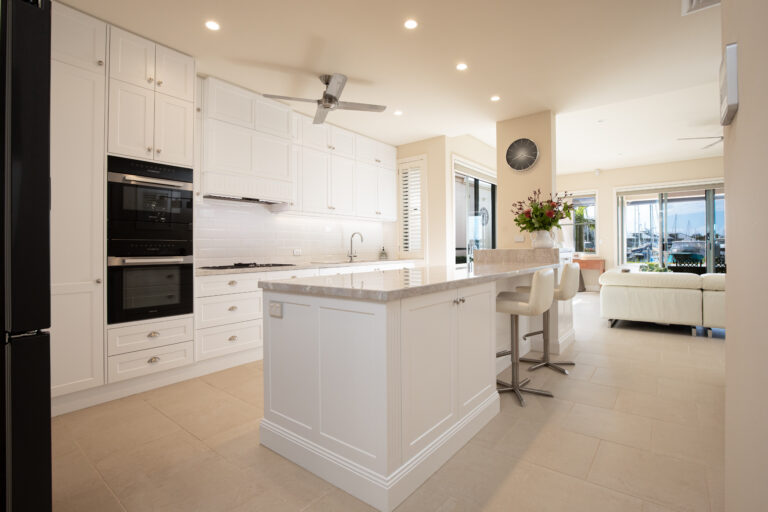
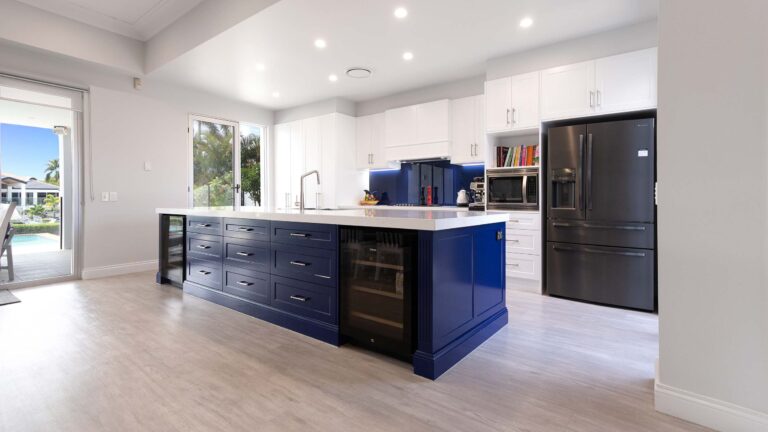
The sudden arrival of guests when the kitchen is still a disaster zone often causes unnecessary panic. Using your central kitchen island as a room divider effortlessly solves this common open-plan struggle. By slightly elevating the island’s outer edge or utilizing solid-backed bar stools, you create a brilliant “invisible fence.” This subtle physical boundary successfully hides chaotic prep work from the lounge’s direct sightline while still allowing you to chat over the counter—a staple of our kitchen renovations on the Gold Coast.
Strategic furniture placement for traffic flow dictates exactly where those socializing guests belong. Position your seating strictly on the outer edge so visitors never block your busy path between the sink and the fridge. This social orientation lets you face the living area while cooking, transforming food preparation into an engaging shared experience. Keep the room’s sensory flow in mind, too—investing in highly effective ventilation ensures your relaxing lounge never smells like tonight’s roasted garlic.
To guarantee this zone functions beautifully as an inviting social hub, run through this checklist for ‘The Perfect Island Social Setup’:
- Power outlets: Are they easily accessible on the seating side for laptops and chargers?
- Legroom: Do the selected stools have at least ten inches of comfortable knee clearance?
- Sightlines: When seated, are your guests looking at a beautiful window view or the recycling bin?
With your physical layout successfully anchored, it’s time to unify the space visually through the strategic use of bespoke colour palettes.
Connecting the Dots with Colour: The ‘Thread’ Method for Visual Harmony
While the island sets physical boundaries, colour visually weaves these distinct areas together. A top strategy among modern open plan living ideas is the “Repeat and Rhythm” rule, acting like a tailored visual thread across your home’s distinct zones. Just stitch a single accent colour—like a sophisticated navy blue—throughout the space: a blue lounge cushion, a tinted dining table vase, and matching designer kitchen towels.
Managing these bold pops requires a foundational backdrop, introducing the renowned 60-30-10 rule, a staple of professional interior color theory. To build cohesive colour schemes for multi-functional rooms, use a “neutral bridge” like warm white for 60 per cent of the space. This quiet base allows your 30 per cent secondary tones to transition smoothly, letting that final 10 per cent accent colour naturally lead the eye across the room.
Before purchasing any luxury decor, create one physical mood board encompassing all three functional zones side-by-side. Seeing your materials together guarantees your threaded colours work harmoniously, gracefully creating a focal point in large rooms without causing chaotic visual clutter. With your aesthetic perfectly unified, you can confidently address the everyday floor layout.
Strategic Furniture Placement: Turning Floating Sofas into Functional Room Dividers
Instead of pushing everything flush against the walls, use the back of your floating sofa to build an elegant invisible hallway. Placing a slim, stylish console table directly behind your seating establishes a clear walkway that guides people naturally between zones. This strategic furniture placement for traffic flow turns awkward gaps into highly intentional paths, providing necessary structural purpose without needing actual walls.
Sit where your guests will relax and carefully check their sightlines across the room. To keep this view warmly welcoming, introduce low-profile boundaries—pieces like waist-high custom bookcases that clearly divide spaces without blocking precious natural light. These shorter items act as subtle visual fences to maintain an airy atmosphere. Tucking a low credenza behind seating also adds highly sought-after hidden storage solutions for clutter-free zones, ensuring everyday messes never ruin your lounge’s bespoke, cosy vibe.
Balancing these lower dividers with tall, lush indoor plants or architectural floor lamps keeps your room from looking visually flat. This deliberate height variation highlights negative space—the empty, “breathing” room around your items that prevents a cramped, overwhelming feeling. Choosing modular furniture for flexible living areas helps maintain this breathing room effortlessly as your hosting needs dynamically change.
Managing the Invisible: Smart Ways to Reduce Noise and Cooking Smells
Expansive living spaces can quickly take on an unwanted “echo chamber” effect, sounding more like empty gymnasiums than comforting homes. Because hard surfaces indiscriminately bounce soundwaves, reducing noise in open plan homes requires strategic acoustic dampening—simply adding high-quality materials that naturally absorb sound. You can easily soften your room’s acoustics using these four items:
- Thick, custom-tailored fabric window curtains
- Plush, textured area rugs placed thoughtfully over hard floors
- Canvas wall art (which absorbs significantly more sound than standard glass frames)
- Chunky knit throw blankets strategically draped over seating
Odours travel just as quickly as those echoes when interior walls disappear. To stop cooking smells from lingering around your luxury sofa, you need incredibly effective ventilation for integrated kitchen diners. Check your exhaust hood’s CFM (Cubic Feet per Minute) airflow rating, adhering to industry ventilation standards. A hood pulling 400+ CFM is a non-negotiable tool for catching airborne grease and smells before they ruthlessly drift into your valuable upholstery.
Finally, keep the daily hum of dishwashers tucked as far away from your entertainment zone as functionally possible. Once these invisible distractions are controlled, you can set the mood with beautifully layered lighting for different zones to make the entire room feel intentionally cosy.
Very Small Open Plan Ideas: Making Every Square Inch Count
Living in a compact home means every single design choice matters, a principle we often apply during our high-end apartment renovations. When exploring very small open plan living ideas, your primary goal is rigidly maximising natural light in combined living spaces. Keep window sightlines entirely clear across the room, letting sunshine freely reach the deepest corners to make the entire area feel miraculously expansive.
Preserving this bright, uplifting atmosphere requires understanding “visual weight”—how heavy an object looks to the eye rather than its actual physical weight. Swap bulky, solid-base couches for elegant “leggy furniture” that lets light softly pass underneath, instantly creating the clever illusion of extra floor space. Strategically placing a large, framed floor mirror opposite these airy pieces will then miraculously double the perceived depth of your narrowest zones.
Tucking away daily messes is crucial when you lack spare rooms to hide them. Rely heavily on hidden storage solutions for clutter-free zones, like luxury lift-top coffee tables or custom storage ottomans, perfectly preparing your beautifully optimised space for effortless everyday living.
Your 3-Step Action Plan for a Cohesive, Flowing Home
Leveraging our decades of renovation expertise, we assure you that you no longer have to stare at a disjointed space wondering where one room abruptly ends and another begins. By mastering how to properly define spaces without walls, you can successfully transform a chaotic, echoing box into an intentional, deeply connected home. Start right at your Lounge Anchor: pull your floating sofa inward and firmly ground it with a generously sized rug.
Bring these professional design principles to life today with our signature ‘Weekend Flow’ checklist:
- Audit sightlines: Ensure your view from the sofa brings profound comfort, not overwhelming kitchen clutter.
- Anchor with rugs: Build robust invisible fences around your dining and living zones using varied textiles.
- Thread a colour: Weave one striking accent hue smoothly through all three functional areas.
You don’t necessarily need a drastically costly renovation to find perfect balance; strategic placement and expert aesthetic insight instantly restore order. Treat your space like a well-planned, luxurious neighbourhood—where your kitchen’s bustling marketplace flows effortlessly into your lounge’s peaceful, inviting park, delivering an unparalleled living experience.